Photo credit: Antoine Couvercelle/ROLEX
By Alix Ramsay
It is the second Monday at Roland Garros. The great throng of players, agents, girlfriends, boyfriends, PR men and women, equipment reps, hangers on and “influencers” (how is that a career?) has thinned out considerably and we are left with… the future.
The first week saw a wave of tearful farewells. It started with Rafa’s great send off (not a dry eye to be seen for miles) and then gathered pace with Richard Gasquet, Caroline Garcia and Nicolas Mahut to name but a few. The old guard are all but gone and those left behind have large shoes to fill.
In this game, the departure of a major star is always a shock but, sport being sport, they are replaced as soon as they have emptied their locker. Like running a knife through gravy, their trail disappears before the knife reaches the edge of the plate. But not this time.
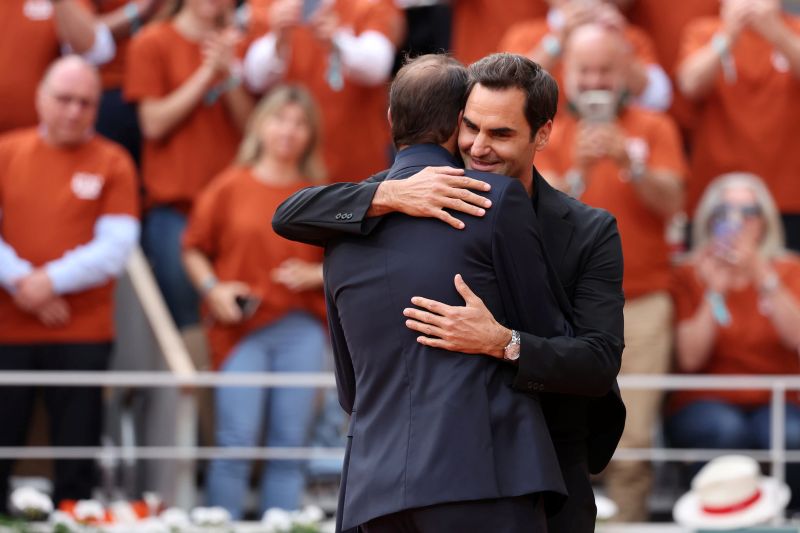
Photo credit: Antoine Couvercelle/ROLEX
Novak Djokovic is the last man standing of the Big Four and he looks a little lost. He admitted that a large part of him left with Rafa: now all of his greatest rivals have retired and the people who pushed him to heights not even he thought possible have left him alone. He will soon join them in the land of cocoa, carpet slippers and memories, that is clear. He is trying to be what he once was but, so far, he is failing. His aura has evaporated with age and a year of lousy results.
That leaves us with… well, what does it leave us with? For two decades we have had an undisputed world No.1 with three men desperately chasing him, all with the talent, strength and willpower to depose him.
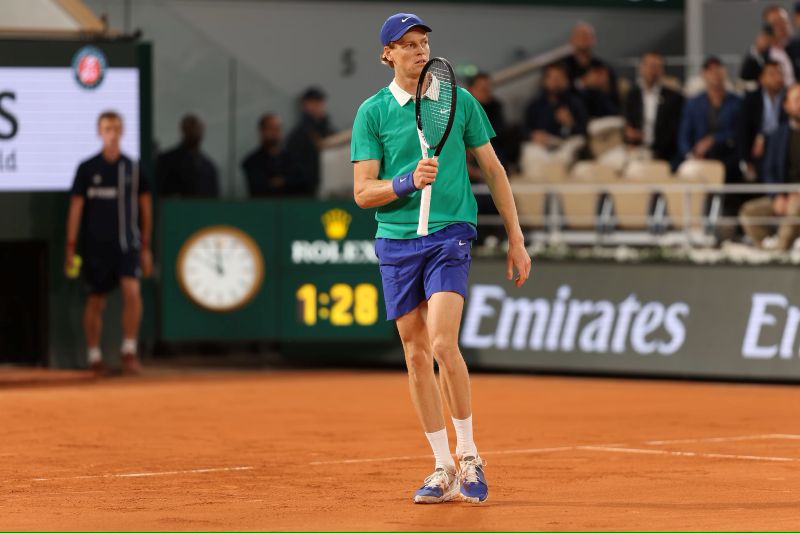
Today we have, as m’colleague, Chris Bowers, pointed out the other night on Radio Roland Garros, two No.1s: Jannik Sinner, the untouchable hardcourt supremo and Carlos Alcaraz, the lord and master of the natural surfaces.
This great divide is not helping to fill the gaping hole left behind by the departure of Messrs Nadal, Federer and Murray and the waning of Djokovic’s powers.
Alcaraz is a joy to watch; Sinner less so. Yes, Sinner’s tennis on the cement of Australia and the US is remarkable but it is relentless rather than inspiring. Alcaraz, on the other hand, can have you on the edge of your seat but he is still inconsistent – sets dropped, winnable matches lost.
Away from the courts, Alcaraz is cheery and willing to talk in his so-so English. Sinner not so much. Apart from his association with the Carota Boys, those chaps dressed as carrots who followed the Italian around for a while (they have not made an appearance here yet) and were funded by Lavazza, his public persona is as pale as his complexion.
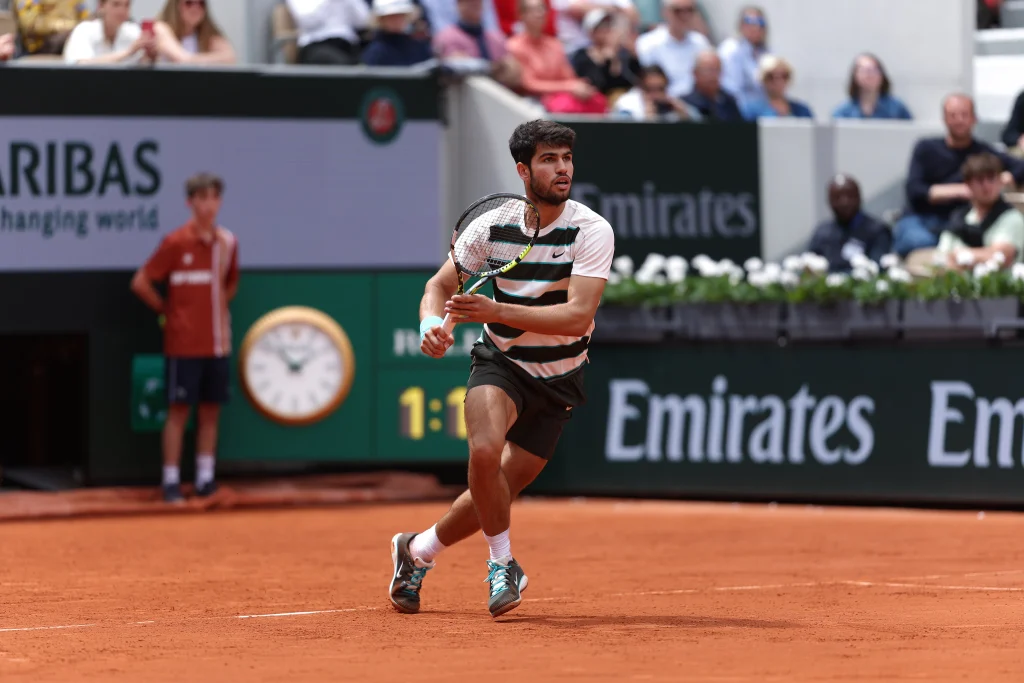
Photo credit: Antoine Couvercelle/ROLEX
We wondered if, perhaps he was more interesting when talking in Italian or German (he comes from the Tyrol by the Austrian border).
Our Italian colleagues laughed and then shook their heads. No, he just is as guarded and dull in all languages.
And behind these two grand slam champions? Not a lot. Sascha Zverev took a pasting from Sinner in the Australian Open final and has not been the same since. Daniil Medvedev, beaten by Cam Norrie here in the first round, has had his day. Ben Shelton is fun to watch but is not going to beat Sinner on a hard court over the best of five. And he was dismissed by Alcaraz on Court Philippe-Chatrier on Sunday evening. Joao Fonseca is on the rise but he is only 18 and was given a short, harsh lesson by Jack Draper in the third round.
Draper has sprinted up the rankings this year and will be the world No.4 by the time the new order is published next Monday. He could help spread the load at the top: he speaks well, he plays an exciting brand of tennis (big lefty serve, walloping forehand and rock-solid backhand) and he is a truly nice bloke. But can he win a slam?
Musetti is charming but lightweight; Rublev has been the promising young prospect for years but has still to get beyond the quarter-finals of any slam. He will also be 28 in October (a fact that makes many of us feel very old). Holger Rune is watching the top boys move ever further into the distance as he tries to work out how compete with the elite. Tommy Paul is fit rather than fabulous. Frances Tiafoe is likeable but limited.
And so the list goes on.
We all wondered what Roland Garros would be like without Rafa. Now we know: it just doesn’t seem that important anymore.